|
| Shop waiting room signage for the spaces patients and visitors encounter before, during, and after check-in. Choose signs and displays for reception policies, facility identification, changing information, hygiene messaging, required notices, and other communication throughout medical office waiting areas.
The right mix of medical office waiting room signs depends on what people need to know, where they need to see it, and whether the message is permanent, changeable, or temporary.
Shop Waiting Room Signage |
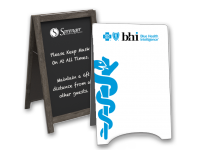
Use A-Frame Signs & Sidewalk Signs for freestanding and changing messages, Custom Wall Clocks for branded time displays, and Dimensional Letters for prominent facility or department identification.
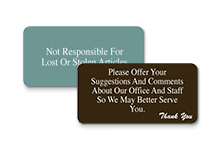
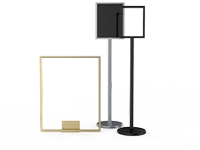
At reception, Front Desk Signs communicate check-in and office policies, while Sign Frames and Wall Mounted Tablet Holders provide options for information that changes over time.
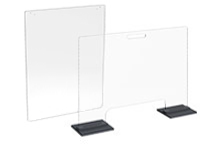
Facilities can also shop Infection Control & Hygiene Signs for hand hygiene, cleaning, and germ-prevention messaging, along with Germ Screen© Sneeze Guards for reception desks, check-in counters, workstations, and visitation areas. Human Trafficking Signs support applicable public-notice requirements.
Plan Signs Around the Patient Arrival Experience
A waiting room is more than a seating area. Patients may need to identify the correct office, understand where to check in, update account information, follow temporary instructions, or find information while they wait.
Place each waiting room sign where the related decision happens. Facility identification belongs where arriving visitors can confirm they are in the right place. Check-in and payment policies belong at reception. Temporary directions or announcements may work better in movable or changeable displays.
Planning around those decision points helps reduce the number of unrelated messages competing for attention in one part of the room.
Permanent, Changeable, & Temporary Messaging
Not every message needs the same type of display.
Permanent identification such as a practice or department name can become part of the interior through dimensional lettering or coordinated architectural signage. Information that changes periodically can be displayed in sign frames or wall-mounted tablet holders. A-frame signs work well when the message or display location may change.
Separating permanent identification from frequently changing information also makes it easier to update the waiting area without replacing the entire sign system.
Waiting Area Signs That Support Reception
Reception desks often become the default place patients go when they’re unsure what to do next. Well-placed waiting area signs can answer routine questions before someone reaches the desk.
Use front-desk messages for check-in, payment, insurance, appointment, and office policies. Place changing instructions where patients can see them before joining a line or taking a seat, and keep signs close enough to the relevant action that the message is easy to understand in context.
Coordinate Waiting Room Signage with the Space
Patient waiting room signs don’t need to look like separate additions to the interior. Dimensional letters, sign frames, tablet holders, front-desk signs, clocks, and other displays can be selected to coordinate with the facility’s colors, finishes, and surrounding architectural signage.
Consistency matters most in waiting rooms because several sign types may be visible from the same viewpoint. Coordinating the permanent elements while giving temporary messages a defined place helps the room remain organized even as information changes.
Update Waiting Room Messaging Without Starting Over
Medical offices routinely need to change policies, instructions, announcements, or other patient-facing information. Choosing changeable formats for those messages can reduce the need for taped notices or mismatched temporary signs.
Use frames, tablets, writable A-frame signs, or other updateable displays for content that changes, while reserving permanent signage for information that is expected to remain consistent. That creates a more flexible signage system without sacrificing a finished, professional appearance. |
|
 Log In
 Contact Us