Choose the Right Information Sign
Different messages serve different purposes throughout a healthcare facility:
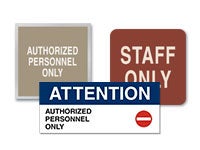
- Authorized Personnel Signs: Identify restricted spaces and communicate who may enter.
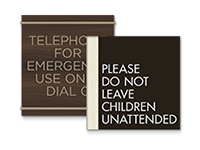
- Custom Notice Signs: Create facility-specific policies, hours, instructions, and other messages.
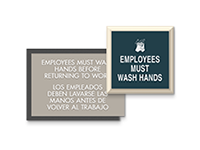
- Employees Must Wash Hands Signs: Reinforce handwashing requirements in staff areas, food service, restroom, and clinical support areas.
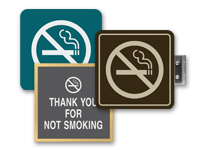
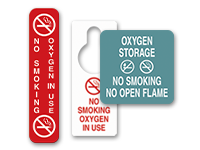
- No Smoking Signage: Communicate smoke-free policies at entrances, common areas, and other appropriate locations.
- Oxygen Safety Signs: Identify oxygen use or storage areas and communicate related fire-safety precautions.
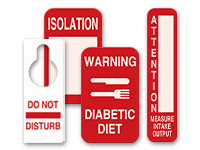
- Patient Care Signage: Share instructions and information that support routine patient care and communication.
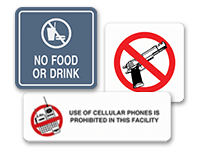
- Policy Signs: Post facility rules, restrictions, privacy notices, payment information, and other operational policies.
Choose the category based on the purpose of the message first, then select the sign style, size, colors, and wording appropriate for the location.
Information Signs for Healthcare
Healthcare facility signage has to communicate the right information at different points in the patient and visitor experience. Visitor information signs may explain check-in procedures, visiting hours, access restrictions, or where guests should wait, while staff-facing signs can communicate operational policies, safety precautions, and restricted access.
Medical facility signs can also address patient-care instructions, privacy expectations, equipment restrictions, hygiene procedures, and other information specific to clinics and outpatient settings. In medical and dental practices, office information signs can communicate hours, payment policies, check-in instructions, and other front-office information without relying on temporary paper notices.
Mental health facility signs may need to communicate visitor procedures, access restrictions, safety instructions, and patient-care policies while maintaining a coordinated, professional environment.
General Information Signs for Everyday Use
General information signs fill the communication gaps that room identification and wayfinding signs don’t. They can explain office hours, visitor procedures, check-in instructions, privacy expectations, facility rules, equipment restrictions, or other information people need once they arrive.
That makes general information signage useful throughout medical offices, dental practices, outpatient clinics, urgent care centers, senior care communities, laboratories, behavioral and mental health settings, and other healthcare facilities. Place each sign where the information becomes relevant rather than expecting patients or visitors to remember instructions posted elsewhere.
Build Coordinated Facility Signage
Facility signs don’t have to look like unrelated notices added over time. HealthcareSigns.com offers informational signage in coordinating sign collections, allowing policy, safety, patient care, visitor information, and custom messages to complement room identification and wayfinding throughout the same interior.
When your message is unique to your organization, choose custom information signs that let you specify the wording rather than settling for a generic message that doesn’t quite fit.
Choosing an Information Sign Design
Start with the amount of information people need to understand and the distance from which they’ll read it. A short policy or restriction can usually use a smaller format, while operating instructions, visitor procedures, or multi-part notices may need more space.
Keep the wording direct, group related information together, and choose a sign size that accommodates the message comfortably. Customizable 5–7-line and 8-line-or-more informational notice layouts provide additional space for longer facility messaging.
|  Log In
 Contact Us