Choose Directional Signs by Number of Lines
The amount of information needed at each wayfinding point determines how many directional lines your sign should include. A simple turn may only require one or two destinations, while major corridor intersections may need to direct visitors toward several areas at once.
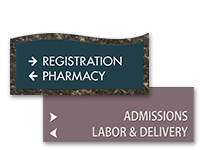
- 2-Line Directional Signs: Guide visitors toward two destinations or use two lines to provide a concise destination and directional message.
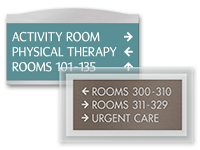
- 3-Line Directional Signs: Add another destination for locations where visitors need to choose between several nearby departments, rooms, or facility areas.
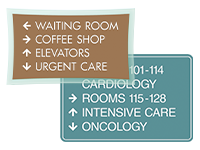
- 4/5-Line Directional Signs: Provide more room for busy intersections and shared corridors serving multiple destinations.
- 6-Line or More Directional Signs: Organize a larger group of destinations at major wayfinding points where several departments, services, or building areas branch from the same location.
Choose enough capacity for the directions that visitors need at that point without adding unrelated destinations that make the sign harder to scan.
Custom Directional Signs with Arrows
Custom directional signs allow the message and arrow to match the actual route through your building. Use destination names that visitors will recognize, then select the arrow direction that corresponds with the turn or path they need to follow.
When customizing directional signs with arrows, keep destination terminology consistent throughout the facility. If the main directory identifies a destination as “Imaging,” subsequent directional signs should use the same wording rather than switching between “Imaging,” “Radiology,” and other variations along the route.
For facilities with several departments or floors, plan the wording and arrow direction for each sign location before ordering. This helps prevent the same directional message from being used in areas where visitors need different instructions.
Indoor Directional Signs for Healthcare Facilities
Indoor directional signs are useful anywhere visitors need to make a navigation decision or confirm that they're still following the correct route. An interior directional sign can guide visitors at lobby exits, corridor intersections, elevator areas, reception areas, department entrances, and transitions between building wings.
Plan indoor directional signage so messages are visible before someone reaches the point where they need to turn. Wall mounted directional signs work especially well along interior routes where visitors approach the sign head-on or from an adjacent corridor.
For longer hallways or locations where a wall sign may not be visible from the direction of travel, hallway and overhead directional signage can provide another way to make destination information easier to see.
Plan Interior Directional Signage Around Decision Points
Effective interior directional signage doesn't require placing an arrow at every point along a route. Focus first on locations where someone must choose between different paths, then add confirmation signs where a long or complex route could leave visitors unsure that they're still headed in the right direction.
Before ordering, consider:
- Destination Text: Use clear names that match directories, room identification, and other signs throughout the facility.
- Arrow Direction: Confirm the direction needed from the exact location where the sign will be installed.
- Number of Lines: Match the sign capacity to the number of destinations visitors need at that decision point.
- Viewing Location: Consider where someone will approach from and whether the sign can be read before they need to turn.
- Sign Collection: Coordinate directional signs with nearby directories, room signs, elevator signage, and other wayfinding elements.
Directional and informational signs for interior spaces are subject to applicable ADA visual-character requirements, including considerations for contrast, finish, character style, and viewing distance. These directional signs generally aren't required to include tactile characters or braille simply because they provide directions, although other sign types along the route may have separate accessibility requirements.
Coordinate Building Directional Signage with Directories
Building directional signage works best when it continues the information visitors receive from a directory. A patient may first use a building directory in a lobby to identify the correct department or floor, then rely on directional arrow signs to navigate corridors and reach the final destination.
Use the same destination names across directories and directional signs so the transition from one part of the wayfinding system to the next is clear. Floor directories, hallway signs, and room identification can then continue that route as visitors move deeper into the facility.
Coordinating these sign types within the same healthcare sign collection can also create a more consistent appearance while allowing each sign to perform a different wayfinding function.
Shop Custom Directional Signs Online
Choose the number of directional lines you need, compare available healthcare sign collections, and customize the applicable destinations, arrows, colors, and design options for your location.
Browse the products above to order custom directional signs for indoor wayfinding throughout medical offices, senior care communities, outpatient facilities, and other healthcare environments.
|  Log In
 Contact Us