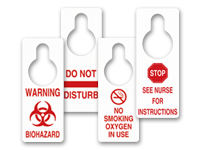
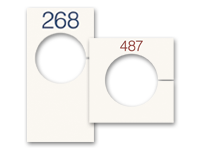
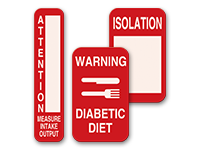
Use door hanger signs for temporary messages at the point of entry, laundry tags to identify resident belongings and laundry, magnetic precautions signs for changing safety and care alerts, and patient whiteboards for reusable in-room communication.
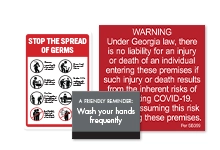
Facilities can also shop infection control signs for handwashing, germ-prevention, cleaning, and other hygiene messaging used throughout patient-care environments.
Patient Signage for Changing Information
Not every message in a healthcare environment belongs on a permanent sign. Patient signage is useful for information tied to an individual patient, current treatment, temporary restriction, safety concern, or changing care plan.
Place temporary communication where staff, patients, or visitors will encounter it at the relevant point: at the room entrance for access or precaution messages, inside the room for changing care information, or with personal items that need to remain identified as they move through the facility.
Match the Format to the Message
Different communication needs call for different formats. Removable messages work well when information changes frequently, while writable surfaces give staff flexibility to update details throughout the day. Tags can travel with belongings, and entrance-level messaging can alert someone before they enter a room.
When selecting patient care signs, consider who needs to see the information, where they will encounter it, and how quickly the message may need to be changed or removed.
Temporary vs. Permanent Room Signage
Patient-specific or changing care information should remain distinct from permanent room identification. Permanent signs identify rooms and spaces and may be subject to ADA requirements based on their function, while temporary patient-care messages serve a different purpose and can change as care needs change.
Keeping those two functions separate helps facilities maintain consistent room identification while giving staff a flexible way to communicate current patient information. |  Log In
 Contact Us